Camp Quantum
Camp Quantum delves into the paradoxes and mysteries of quantum physics, revealing how particles can exist simultaneously in multiple places and observations can alter reality.

Camp Quantum delves into the paradoxes and mysteries of quantum physics, revealing how particles can exist simultaneously in multiple places and observations can alter reality.

Buy this domain and the website, or turn your own domains into Content Rich Websites like this.
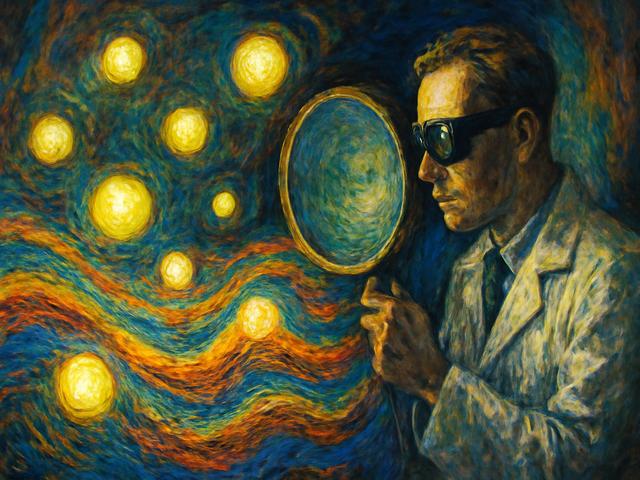
In quantum mechanics, observation influences the phenomena being examined. This is illustrated by photons, which display wave-particle duality as shown in the double-slit experiment. Unobserved photons create interference patterns, but observed photons exhibit particle behavior, highlighting quantum superposition and wave function collapse. This behavior underscores fundamental quantum principles such as the observer effect and the probabilistic nature of quantum states.
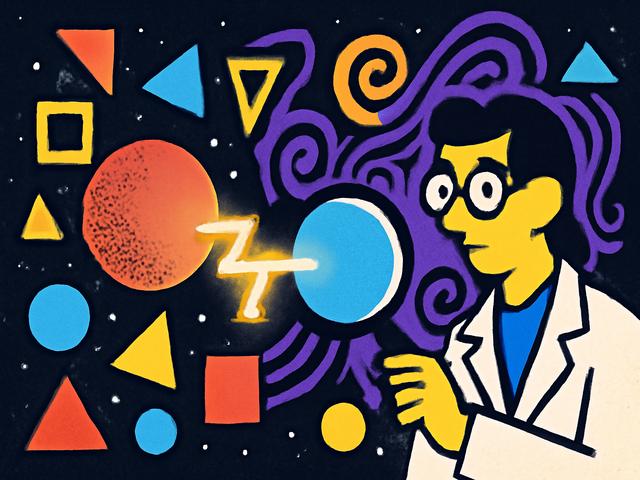
An exploration of quantum nonlocality, a phenomenon challenging classical physics by demonstrating entangled particles' interconnectedness regardless of distance, validated through Bell's theorem and experimental violation of Bell inequalities.
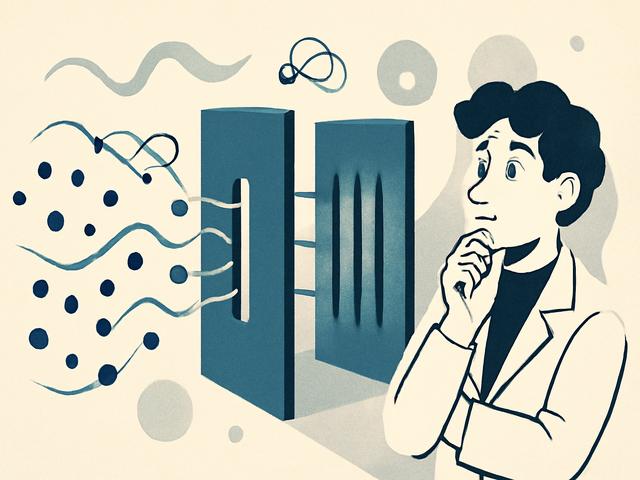
An in-depth look at wave-particle duality, exploring how quantum entities like electrons and photons manifest both particle-like and wave-like properties. Delve into phenomena such as the double-slit experiment and wave function collapse, and consider interpretations like the Copenhagen framework, examining the role of observation in quantum mechanics.
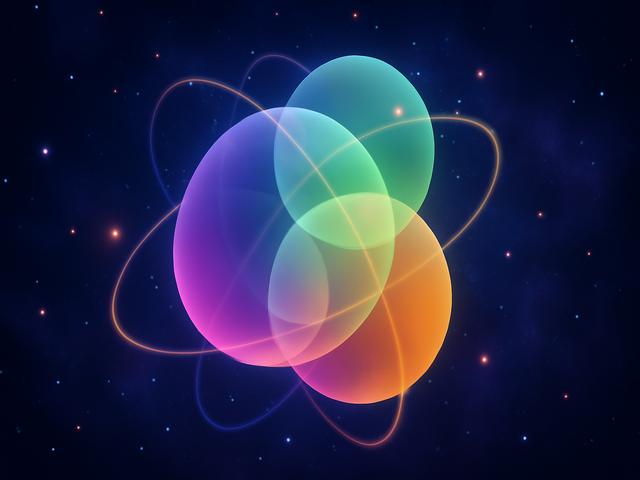
Exploration of how the concept of a single photon embodies infinite potential realities, through the principles of wave-particle duality and the many-worlds interpretation in quantum mechanics. Emphasizes the philosophical reflection of infinite branching outcomes.
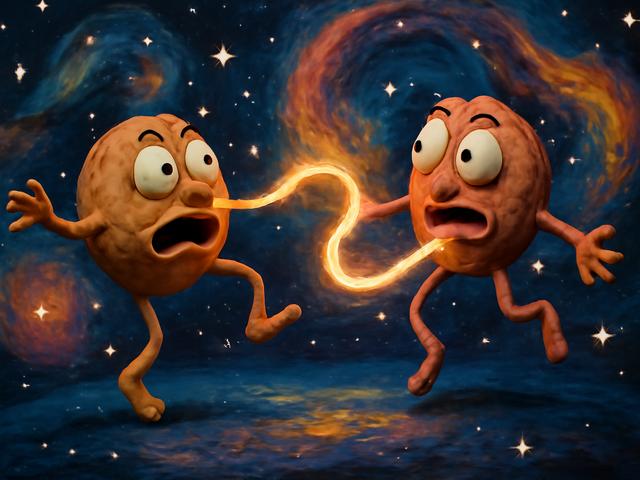
Explore the phenomenon of quantum entanglement where two electrons exhibit instantaneously correlated states regardless of distance. Understand how entangled electrons maintain state dependencies and investigate their implications in quantum computing and secure communication. This analysis includes insights into how entanglement aligns with quantum field theory principles, such as the Pauli exclusion principle, and the challenges posed by environmental interactions and decoherence.

Explores the principle of superposition, where particles exist in multiple states simultaneously until observed, influenced by wave-particle duality and quantum state probabilities. Highlights challenges in macroscopic applications due to decoherence.

The observer effect in quantum mechanics highlights the alteration in particle behavior when measured, exemplified by the double-slit experiment. This experiment reveals that particles can display both wave-like and particle-like properties depending on observation. The observer effect underscores the concept of superposition and the collapse of quantum states upon measurement. Various interpretations, such as the Copenhagen and many-worlds theories, strive to explain this phenomenon. Measurement is more than human observation and involves any interaction that extracts information from the quantum system.
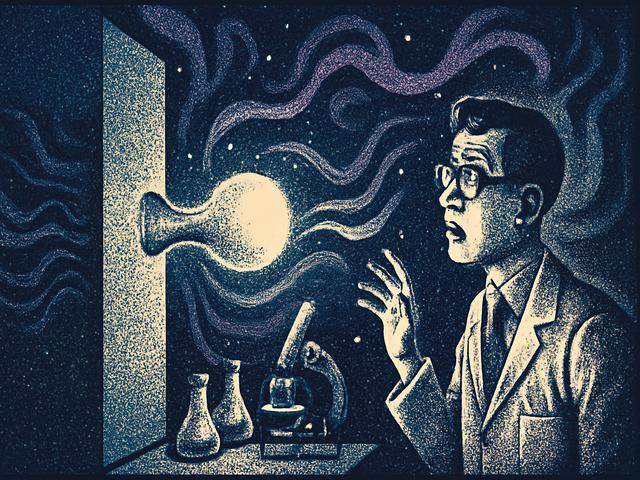
Quantum tunneling is a quantum mechanics phenomenon allowing particles to pass through potential energy barriers without sufficient energy, grounded in their wave-like properties and probabilistic nature. This process is crucial in phenomena such as nuclear fusion in stars and technological advancements like scanning tunneling microscopes.

This article discusses the principle of indistinguishability in quantum mechanics, where identical particles cannot be distinguished, even theoretically. It explores how this leads to quantum superposition and entanglement, explaining the non-classical probability distributions observed in quantum systems. The text examines mathematical descriptions such as wave functions derived from the Schrödinger equation, illustrating the probabilistic nature of particle position and momentum. It further addresses the implications of Fermi-Dirac and Bose-Einstein statistics for fermions and bosons, respectively, and how these principles challenge classical notions of locality and determinism.

The Many-Worlds Interpretation (MWI) of quantum mechanics proposes that all possible outcomes of a quantum event occur, each in its separate, parallel universe. This framework addresses the wave function collapse issue by eliminating the collapse and suggesting a multiverse where every quantum event causes a branching into new universes. Despite its mathematical consistency, the MWI remains controversial due to its philosophical implications and lack of empirical validation, as separate universes do not interact.

Get your DOMAINs online NOW!
Bring it to the Ranch!
This content is for entertainment and technical demonstration only and may be flawed, incomplete or outdated. Always consult a qualified professional for information and decisions. Content is provided “as is” without warranties of any kind. Use at your own risk. We're not responsible for any loss or damage from use or reliance.